


Water First, Weed Second: Post Holiday Garden Plan for Belgium Expats

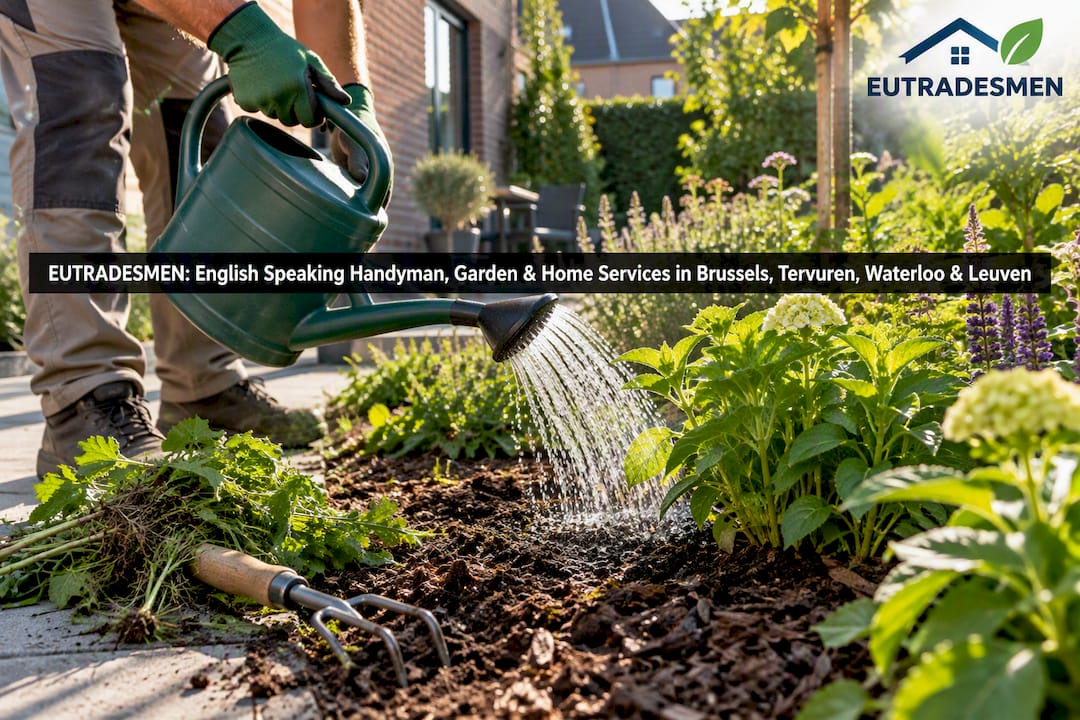
Water first, weed second, prune last, and do it all in that order within your first hour home. A calm walk-around tells you what actually needs saving before you touch a single stem. Get this sequence right and most stressed plants bounce back within days; get it backwards and you risk finishing off what the sun and neglect started.
Table of Contents
After holiday garden cleanup: what to check in the first hour
Land the suitcase and go straight outside before the kettle goes on. Walking the plot with fresh eyes catches the problems that matter before they get worse, and a calm, ordered walk-round is what stops you wasting a day on the wrong job.
Work through this sequence:
Scan for water damage. Look for flooding around drains, waterlogged containers, or bone-dry beds. Push a finger into the soil at root depth. If it’s dry two inches down, that bed is priority one.
Check for pests and nests. Slugs, aphid colonies, and wasp or bird nests thrive while you’re away. Spot them now rather than mid-mow.
Water the worst-hit plants deeply. Pots and hanging baskets dry out fastest. Give them a proper soak, not a splash.
Pull the tallest weeds. Anything shading your vegetables or seedlings comes out first.
Isolate anything diseased. Set it aside from your compost heap. More on that below.
Pro Tip: Water in the early evening if the soil is dry and hot, not at midday. Cooler soil absorbs water more evenly and you lose far less to evaporation.
Once containers are grouped in shade and the ripest vegetables are picked, the garden stops deteriorating. Everything after this point is recovery, not damage control.
Step-by-step garden recovery: plants, lawn, beds and soil
With the emergency triage done, work through each zone properly. This is where post-holiday garden care actually rebuilds what the break took out of your plot.
Watering. Aim water at the root zone, not the leaves; wet foliage in warm weather invites mildew and fungal spots. Deep, infrequent watering beats a daily sprinkle because it trains roots downward. You’ll see recovery within two to four days on herbaceous plants; leafy shrubs can take longer to show it, so don’t panic if a hydrangea still looks sulky after a week.
Weeding. Pull weeds while the soil is still soft from your watering pass; they come out roots and all, rather than snapping off and regrowing. Anything carrying seed heads or visible disease should not go on the compost heap. Weeds with seed or disease need hot composting to break down safely. An ordinary garden heap rarely gets hot enough, so bag that material for council collection instead.
Pruning. This is where impatience does real damage. Recovery guidance is consistent on the order: water, then weed, then prune, because cutting back a drought-stressed plant too soon removes the leaves it needs to photosynthesise its way back to health. Cut only:
Dead, broken, or clearly diseased stems
Anything blocking a path or posing a safety hazard
Nothing that flowers on old wood until after it’s bloomed
Lawn. Set the mower blade high for the first cut, roughly a third higher than usual, and never scalp a lawn that’s gone dry and pale. Water deeply the evening before mowing if the grass is crisp underfoot. Bare or thin patches are worth overseeding once the lawn has had a full watering cycle to recover, typically a week or so after your return.
Containers and vegetable patch. Some plants are quick wins; others need patience. Grouping plants into recovery tiers helps you decide fast: annuals and most perennials often perk up within days, while shrubs that have shed leaves under stress can take a full season to show their true recovery. Harvest anything ripe immediately, pull fully dead annuals and replace them, and re-pot any container plant that’s become rootbound or waterlogged.
Soil and mulch. Loosen the surface with a hand fork where it’s crusted, work in some compost, and top up mulch to around 70 to 100mm in depth. Mulch is genuinely the single most effective low-effort fix for cutting repeat watering problems, because it locks moisture into the soil and suppresses the next flush of weeds before it starts.
Leave a few seedheads and some leaf litter if you can bear it. It looks less “tidy” but it feeds birds and insects through the following weeks, and not every bit of holiday wildness needs cutting back.
What tools and supplies do you need for garden recovery?
A short kit list saves repeat trips to the shed:
Secateurs, a hand fork, sturdy gloves, a wheelbarrow, and a spring-tine rake
Two to three inches (50 to 75mm) of mulch, plus bagged compost or topsoil for beds that have compacted
Weed-suppressing fabric if you’re relaying a gravel or bark path
A hose timer and a soaker or drip kit, so next year’s break doesn’t leave you in the same spot
For bigger jobs, hiring beats buying. A mower service, a pressure washer for patios gone green, or a mini loader for shifting a season’s worth of cuttings all cost less for a day’s hire than they do to own outright. If the irrigation side feels like too much fuss to set up yourself, that’s exactly the kind of small job worth handing to a professional gardener rather than a shed full of half-used kit.
When should you hire a gardener instead of DIY?
Some jobs are worth your own weekend; others aren’t — if you’re unsure, consider professional help that also benefits from effective landscaping SEO services to win more contracts and ensure quality. Hire a professional when you’re facing major debris removal, hedge or tree work above head height, large patches of dead turf, or a pest and disease problem you can’t identify with confidence. If you simply don’t have the time, that’s reason enough on its own.
To get a fast, accurate quote, send:
Photos of the area from a couple of angles
Rough size in square metres
Access notes, such as side gate width or shared driveways
Preferred dates and any hazards (steps, ponds, low branches)
Sending photos and measurements upfront speeds up quoting considerably; a one-off clean-up or hedge trim typically turns around within half a day to a few days, depending on scope. For debris, check whether your local council collects garden waste or whether a contractor needs to remove it; Waterloo’s collection rules are a useful example of how local rules shape how you present bags and branches for pickup.
Services available for post-holiday garden recovery
Our team has extensive experience helping English-speaking residents and expats across Belgium sort out exactly this kind of job. Our gardening team covers:
One-time garden clean-ups after a holiday, house move, or overgrown patch
Regular garden maintenance so you never come home to the same mess twice
Handyman support for anything else the walk-round turns up, from a wobbly fence panel to a leaking outdoor tap
Combined visits where garden and small repair work get sorted in a single trip
We rotate teams across Brussels, Waterloo, Tervuren, and Leuven, so whether your patio in Waterloo has gone from lawn to jungle or your Tervuren hedges need shape back, someone local speaks your language and knows the ground. Send a WhatsApp message with photos and we’ll come back with a fast quote, often the same day.
What we see go wrong most often after a break
The mistake we see most is panic pruning. Someone comes home to a sorry-looking shrub and reaches straight for the secateurs before checking whether it’s actually dying or just thirsty. Water first, wait two days, then judge.
The clients who get the fastest, most accurate quotes are the ones who send us a couple of photos and a rough measurement before we’ve even arrived. A short “before” picture, a note on what changed, and an “after” once we’ve finished tells the whole story, and it’s the format we’d recommend to anyone briefing a tradesperson for the first time.
— Eutradesmen
Contact Eutradesmen for your garden clean-up quote
Our service is a practical alternative to chasing quotes from different local firms in a language you might not speak. One WhatsApp message, one English-speaking team, one clear quote, covering everything from a single overgrown bed to a full garden and landscaping reset.
If your break has left more than the garden needing attention, our handyman team can tackle the fence panel, the leaking tap, or the flat-pack shed you never got round to assembling, in the same visit. Send us photos of the area, a short description of what’s needed, your preferred dates, and any access notes (side gate, shared driveway, pets). We’ll come back with a quote fast, whether you’re in Brussels, Tervuren, or Waterloo.

Contact Eutradesmen:
WhatsApp: +32 466 900 281 Telephone: +32 2 808 70 31 Email: info@eutradesmen.com
Sources
Our recovery order draws on established how-to guidance from Morton Arboretum and HGS Garden Supplies, alongside our own local service pages for hands-on help.
FAQ
What should I do with my garden at the end of a season away?
Water your most stressed plants deeply first, then weed while the soil is soft, then prune only dead or hazardous growth. Leave major cutting back until the plant shows clear signs of recovery, usually within a few days to a couple of weeks.
How do I keep my plants alive while I’m on holiday?
Group containers in shade, set up a simple hose timer or drip kit before you leave, and ask a neighbour to check for flooding or extreme dryness midway through your trip. A drip kit or soaker hose prevents most of the damage you’d otherwise come home to.
When should I do a full garden clean-up?
Do an immediate triage the day you get back, covering watering, weeding, and safety hazards. A fuller clean-up, including lawn overseeding and mulch top-ups, is best done within the following week once you can see which plants have actually recovered.
How much does it cost to clear a garden in Belgium?
Costs vary with the size of the plot and how much debris needs removing, so Eutradesmen prices each garden clean-up on request after seeing photos and measurements. Sending clear pictures and a rough square metre size gets you the fastest, most accurate quote.
Should I hire a gardener or handle it myself?
Straightforward watering, weeding, and light pruning are fine to handle yourself over a weekend. Hedge work above head height, major turf repair, large debris removal, or anything you simply don’t have time for is worth handing to a professional gardener.
Follow us everywhere:
Instagram → https://www.instagram.com/eutrsdesmen/ Facebook → https://www.facebook.com/eutradesmen/ Threads → https://www.threads.com/@eutrsdesmen BlueSky → https://bsky.app/profile/eutradesmen.bsky.social TikTok → https://www.tiktok.com/@eutradesmenbelgium Pinterest → https://www.pinterest.com/eutradesmen/ Google Maps → https://maps.app.goo.gl/zjmYyCV1uADPj7QP6 YouTube → https://www.youtube.com/@Eutradesmen LinkedIn → https://www.linkedin.com/in/eutradesmen-belgium X Twitter → https://x.com/eutradesmen
Ready to solve your issue? WhatsApp +32 466 900 281 for a free quote today!
#AfterHolidayGardenCleanup #GardenMaintenanceBrussels #WaterlooGardener #TervurenGardening #LeuvenGarden #EnglishSpeakingGardenerBelgium #ExpatGardenTips #BrusselsHandyman #Eutradesmen #PostHolidayGardenCare
Recommended


Comments