


Basic electrical fixes in Uccle: a simple guide for expats

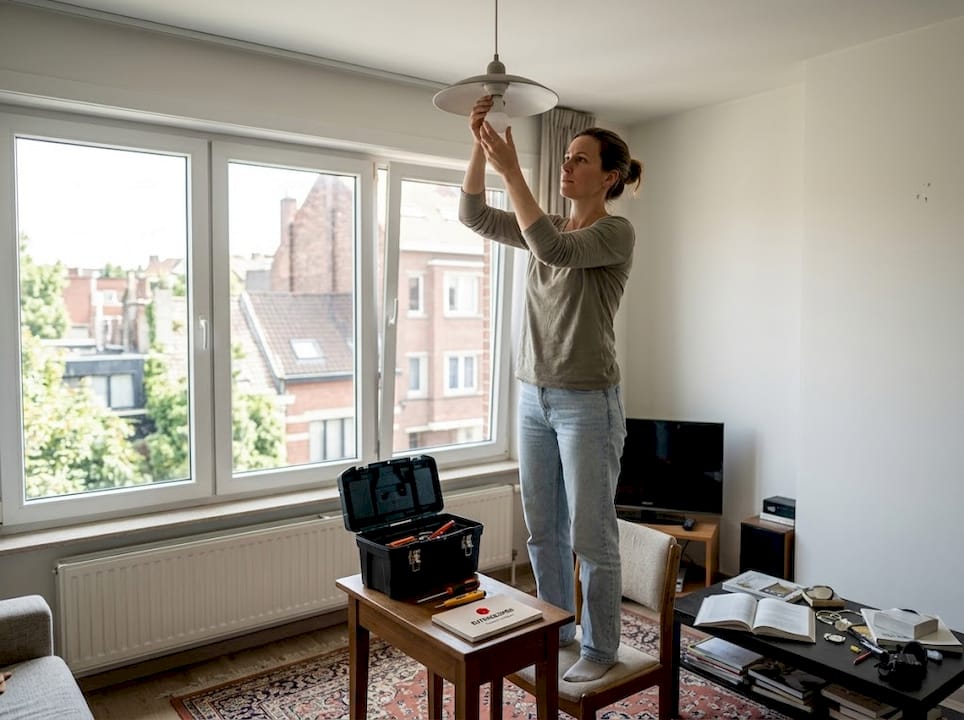
It’s a Sunday evening and the lights in your Uccle flat suddenly go out. You check your phone, realise it’s not a street-wide outage, and feel that familiar knot of anxiety: where is the fuse box, what do the labels say, and who do you call if you can’t read French or Dutch? For English-speaking expats and non-Dutch/French residents in Uccle, even a minor electrical hiccup can feel overwhelming. Belgian rules, landlord obligations, and safety standards are not always obvious to newcomers. This guide walks you through exactly what you can fix yourself, what tools you need, and when it is time to pick up the phone and call a professional.
Table of Contents - Basic electrical fixes Uccle
Key Takeaways
Point | Details |
Know your limits | Expats must follow strict legal and safety boundaries for DIY electrical work in Belgium. |
Safety first | Switch off power, use proper tools, and never attempt jobs you’re unsure about. |
Landlord vs. tenant | Tenants handle small issues, landlords are responsible for major electrical compliance and repairs. |
Documentation matters | Keep records or photos of any electrical fix done for insurance and communication needs. |
Get help when needed | Seek qualified, English-speaking electricians for anything beyond simple maintenance. |
What homeowners and renters can (and can’t) fix
Before you touch a single socket, you need to know where the line is drawn. In Belgium, the rules around electrical work are clear, and crossing them can create real problems for your safety, your insurance, and your relationship with your landlord.
As a tenant, your responsibilities are narrow. You are expected to carry out minor day-to-day maintenance, such as replacing a blown light bulb or reporting a fault promptly. Anything beyond that sits firmly with your landlord. According to Belgian tenancy rules, tenants handle minor maintenance only, while landlords are responsible for compliance, major repairs, and ensuring the property meets decency standards. If you attempt significant electrical work without authorisation, you could be held liable for any damage or injury that results.
As a homeowner, you have more freedom, but not unlimited freedom. You can carry out basic repairs and small improvements, but Belgian law requires that electrical installations meet certified standards. That means even minor work should be documented, and any significant changes must be inspected and certified by an accredited body.
Here is a quick comparison to keep things clear:
Task | Tenant | Homeowner |
Replace a light bulb | ✓ Allowed | ✓ Allowed |
Reset a tripped breaker | ✓ Allowed | ✓ Allowed |
Swap a wall plate or faceplate | ✓ With care | ✓ Allowed |
Replace a fuse in the fuse box | Report to landlord | ✓ With care |
Install new wiring or sockets | ✗ Not allowed | Requires certified professional |
Repair faulty wiring | ✗ Not allowed | Requires certified professional |
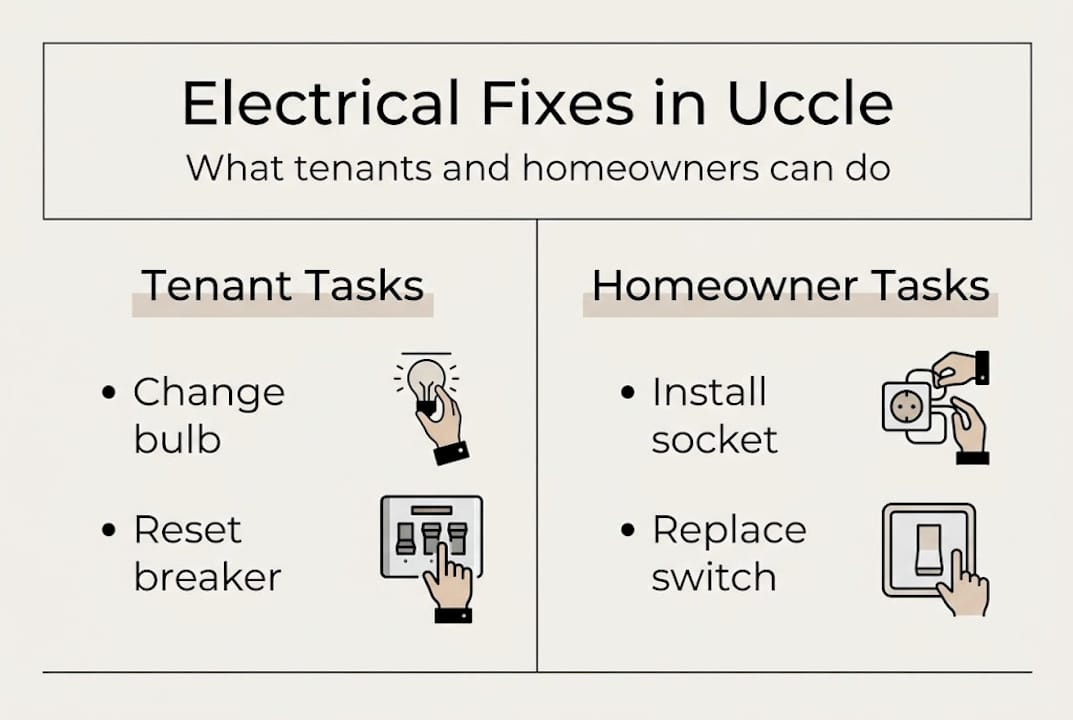
For tenants, the golden rule is simple: report, don’t repair. If you notice flickering lights, a socket that sparks, or a breaker that keeps tripping, write it down and inform your landlord in writing straight away. This protects you legally and ensures the landlord cannot later claim you caused the problem.
For homeowners, it is worth familiarising yourself with handyman tasks for newcomers in Belgium so you understand which jobs are genuinely DIY-friendly and which ones require a certified tradesperson for basic electrical fixes Uccle.
The tasks that are always for professionals include:
Any work on the main distribution board
Installing or moving sockets and light fittings
Replacing or repairing wiring inside walls
Any work near water (bathrooms, kitchens)
Connecting new appliances to fixed wiring
“In Belgium, landlords are legally obligated to ensure the property is safe and compliant. Tenants should never feel pressured to fix electrical faults themselves. Report the issue, keep a record, and let your landlord arrange a certified repair.”
If you are ever unsure, browse tips from electricians who work regularly with expats in Uccle and Brussels. A quick read can save you a costly mistake.
Essential tools and basic safety
With your boundaries now clear, it is time to gather what you will need and understand safe working protocols. Having the right tools is not just about convenience. It is about protecting yourself from a potentially life-threatening situation.
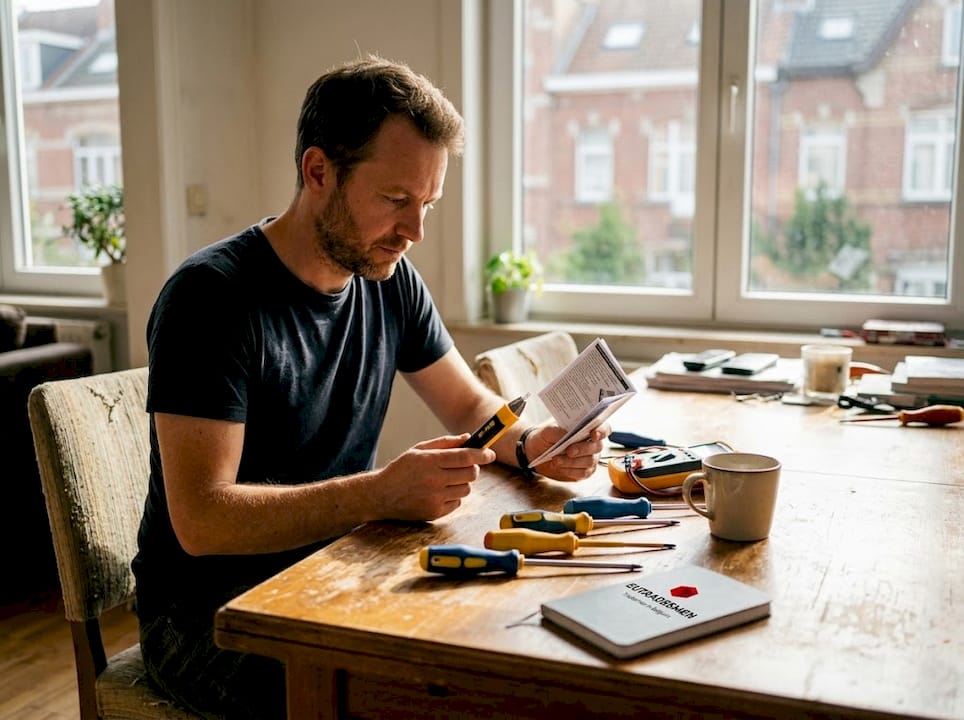
Here are the essential tools for basic electrical fixes:
Tool | What it does | Why you need it |
Insulated screwdriver set | Turns screws safely near live circuits | Prevents electric shock |
Non-contact voltage tester | Detects live current without touching wires | Essential safety check |
Torch or head torch | Lights up fuse boxes and dark spaces | Visibility when power is off |
Insulated pliers | Grips and bends wires safely | Reduces shock risk |
Electrical tape | Insulates exposed connections temporarily | Quick, safe cover |
Safety gloves (rubber) | Protects hands from shock | Basic personal protection |
You can find good quality insulated tools at major Belgian retailers such as Brico, Gamma, or Leroy Merlin. These shops have English-speaking staff in many Brussels locations, and their websites often have French and Dutch product descriptions you can run through a translation app.
Before starting any electrical task, follow these safety steps without exception:
Switch off the main power at the fuse box or consumer unit before touching anything
Use your voltage tester to confirm the circuit is dead, even after switching off
Work in good light so you can see clearly what you are doing
Never work alone if you are unsure; have someone nearby who can call for help
Keep water away from your work area at all times
Do not rush; slow and careful is always safer than quick and careless
One important note for expats: Belgian electrical systems run on 230V (the same as most of Europe), but the socket types and fuse box layouts may differ from what you are used to in the UK, the US, or elsewhere. Belgian homes typically use Type E sockets, and fuse boxes often use automatic circuit breakers rather than old-style fuses. If your home has an older installation with ceramic fuses, treat it with extra caution and consider asking a professional to assess it.
As a reminder, major work requires certified professionals in Belgium, and even for homeowners, keeping a record of any work you do is strongly advised. Check out handyman services in Belgium for a broader picture of what qualified tradespeople can handle quickly and affordably.
Pro Tip: Buy a non-contact voltage tester as your very first tool. They cost around €10 to €20 at Brico or Gamma and can tell you instantly whether a circuit is live. This single tool prevents the most common cause of DIY electrical accidents.
Step-by-step: Simple fixes you can do yourself
Once you have your toolkit and know the risks, you are ready to address the most common safe fixes yourself. These are the tasks that are practical, legal, and manageable for most people with no specialist background.
1. Replacing a blown light bulb
Switch off the light at the wall switch.
Wait a minute if the bulb was recently on; it may be hot.
Unscrew or unclip the old bulb (check whether it is a bayonet, screw, or push-and-twist fitting).
Check the wattage printed on the old bulb and match it on the new one.
Fit the new bulb firmly and switch the light back on.
2. Resetting a tripped circuit breaker
Locate your fuse box (often in the hallway, kitchen, or utility room).
Look for any switch that has flipped to the middle or off position.
Switch it fully to OFF first, then firmly back to ON.
If it trips again immediately, stop and call a professional. Repeated trips signal a deeper fault.
3. Swapping a wall plate or switch cover
Switch off the power to that circuit at the fuse box.
Use your voltage tester to confirm no current is present.
Unscrew the old cover plate carefully.
Do not touch or move any wires. Simply swap the plastic cover for the new one.
Screw the new plate in place and restore power.
4. Checking a fuse in a Belgian fuse box
Switch off all appliances on the affected circuit.
Locate the fuse box and identify the relevant fuse or breaker.
If it is a modern breaker, reset it as above. If it is an older ceramic fuse, do not attempt to replace the fuse wire yourself; call a professional.
For tenants, reporting issues immediately is a legal requirement, and keeping documentation protects you if disputes arise later.
Pro Tip: After any fix, take a quick photo of the fuse box, the replaced part, and the date on your phone. Keep a simple log in a notes app. This is invaluable if your landlord questions a repair or if you ever need to make an insurance claim.
For more guidance on managing repairs efficiently, see this resource on managing electrical repairs workflow.
Signs that the job is NOT basic (stop immediately):
You smell burning or see scorch marks near a socket or switch
The breaker trips again within seconds of being reset
You hear buzzing or crackling from inside a wall
Any wire looks melted, discoloured, or damaged
You feel any tingling or mild shock when touching a switch
If any of these occur, stop, leave the area, and call a qualified electrician.
How to know it’s time to call an electrician
Even with confidence in tackling the basics, it is crucial to recognise issues that demand professional intervention. Some problems look minor on the surface but point to something much more serious underneath.
Here are the warning signs that mean you should stop and call for help:
Repeated breaker trips: A breaker that keeps tripping is telling you there is too much load or a fault on that circuit. Resetting it repeatedly is not a fix.
Burning smells: Any smell of burning plastic or rubber near sockets, switches, or the fuse box is a serious warning sign. Switch off the power and call immediately.
Buzzing or crackling sounds: Electrical noise from walls or fittings often means loose connections or damaged wiring inside the wall.
Flickering lights across multiple rooms: This is not just an annoying bulb. It can signal a fault in the main supply or wiring.
Discoloured or warm sockets: A socket that feels warm or has brown marks around it has likely been overloaded or has a wiring fault.
Any issue involving water: Kitchens and bathrooms require specialist electrical work. Never attempt repairs near water yourself.
For tenants, the escalation process is straightforward. Write to your landlord (email is fine) describing the problem clearly, the date you noticed it, and any steps you have already taken. Belgian law is clear that landlords handle compliance and major repairs for rental properties. If your landlord does not respond within a reasonable time, you may have grounds to escalate to local authorities.
“In Uccle and across Belgium, electrical compliance is not optional. An uncertified installation can void your home insurance and create serious legal exposure. When in doubt, always choose a certified professional.”
For homeowners, compliance is equally important. Any significant electrical work must meet Belgian AREI/RGIE standards (the national electrical installation regulations). Failure to comply can affect your property’s resale value and your insurance cover.
For detailed guidance on staying compliant, read this article on compliance work advice. And if you need to find a certified electrician in Uccle quickly, it is easier than you might think when you use a service that already works with English-speaking expats.
The real challenge of electrical repairs for expats in Uccle
Looking at these practical steps, it is worth discussing what really sets the expat experience apart when it comes to electrical repairs in Uccle.
The physical tasks are rarely the hard part. Resetting a breaker or swapping a bulb is straightforward once you know the steps. What trips people up is everything around the task: reading a fuse box labelled in French or Dutch, understanding what your lease actually says about repairs, or explaining a fault to a tradesperson who does not speak English.
Many expats arrive with DIY habits from the UK or the US that do not translate directly to Belgium. What is considered a standard homeowner task back home may require certification here. That gap in expectation causes real stress, and sometimes costly mistakes.
The communication barrier with landlords is also underestimated. A vague WhatsApp message saying “the lights are off” is not the same as a clear, written report with a date, a description of the fault, and a request for action. The latter protects you. The former gets ignored.
Our honest advice: build a relationship with a trusted English-speaking handyman or electrician in Uccle before you need one urgently. Knowing who to call at 9pm on a Sunday is worth more than any toolkit. Browse top repair tasks for new expats to get a sense of what reliable local support looks like.
Documentation and clear escalation matter far more than DIY bravado. A well-written email to your landlord and a phone call to a certified professional will always serve you better than guesswork inside a fuse box.
Need reliable support for electrical fixes in Uccle?
If you are not sure whether your electrical issue is a simple fix or something more serious, do not guess. Getting it wrong can be dangerous, and in Belgium, it can also have real legal and financial consequences.
At Eutradesmen, we specialise in supporting English-speaking expats and non-Dutch/French residents across Uccle, Brussels, and the wider region. Our vetted, certified tradespeople understand the local regulations and speak your language, so there is no miscommunication and no frustrating guessing game. Whether you need a qualified electrician for expats to handle a compliance issue or a reliable Brussels handyman for a range of smaller tasks, we make it straightforward to get the right help quickly. Request a quote today and get peace of mind from people who genuinely understand your situation.
Frequently asked questions
What electrical repairs can tenants legally do in Uccle?
Tenants in Uccle can change light bulbs and minor fittings, but must report major issues to their landlord, who is responsible for compliance and major repairs under Belgian law.
Do I need a certified electrician for all electrical work in Belgium?
Homeowners can handle very minor tasks themselves, but significant work requires certification and must meet Belgian AREI/RGIE standards. When in doubt, always use a certified professional.
Who is responsible if there’s a major power problem in a rental?
The landlord is responsible for structural or compliance issues. Once you have reported the fault in writing, they are obliged to arrange a certified repair within a reasonable timeframe.
What are the safety steps before starting any electrical fix?
Always switch off the main power at the fuse box, use insulated tools throughout, and confirm the circuit is dead with a non-contact voltage tester before touching anything.
How can expats find English-speaking electricians in Uccle?
Use a trusted local service that specialises in English-speaking professionals, such as Eutradesmen, to avoid miscommunication and ensure the work meets Belgian certification standards.
Contact Eutradesmen:
WhatsApp: +32 466 900 281 Telephone: +32 2 808 70 31 Email: info@eutradesmen.com
Follow us everywhere:
Instagram → https://www.instagram.com/eutrsdesmen/ Facebook → https://www.facebook.com/eutradesmen/ Threads → https://www.threads.com/@eutrsdesmen Bluesky → https://bsky.app/profile/eutradesmen.bsky.social TikTok → https://www.tiktok.com/@eutradesmenbelgium Pinterest → https://www.pinterest.com/eutradesmen/ Google Maps → https://maps.app.goo.gl/zjmYyCV1uADPj7QP6 YouTube → https://www.youtube.com/@Eutradesmen LinkedIn → https://www.linkedin.com/in/eutradesmen-belgium
#ElectricalRepairsUccle #ExpatBelgium #EnglishHandymanBrussels #UccleLiving #ElectricianBrussels #ExpatLife #HandymanUccle #BrusselsExpats #EnglishSpeakingElectrician #DIYBelgium #RentersUccle #HomeRepairsBrussels #Eutradesmen #BelgiumExpats #IxellesUccle #BrusselsHandyman #ElectricalSafetyBelgium #ExpatHomeHelp
Recommended
Comments