


Electrical Safety Guide For Antwerp Expats: Step-by-Step Compliance

Updated: Feb 26
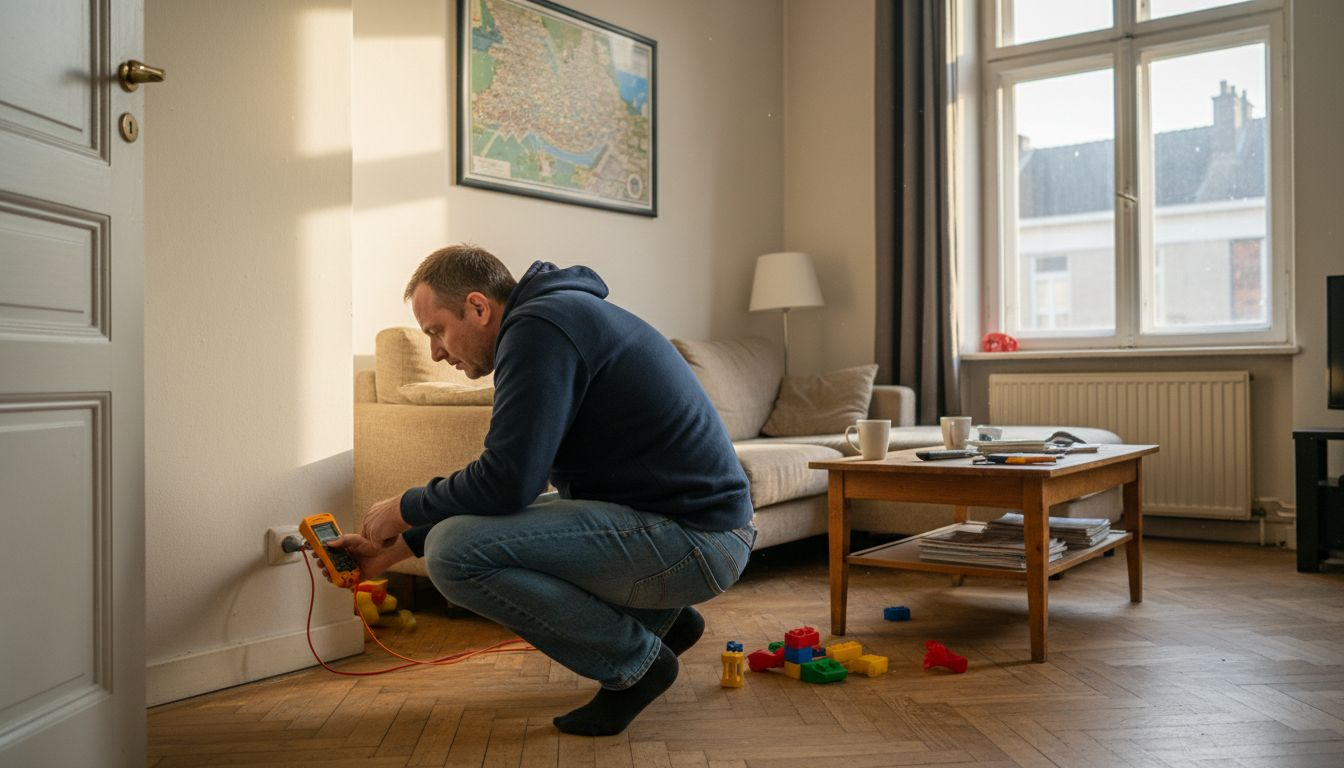
Antwerp Electrical Issues & Problems: How To Avoid
WhatsApp us:
+32 466 900 281
Moving into a Belgian property can quickly expose you to confusing electrical standards and unfamiliar safety expectations. For many British or American expats in Antwerp, simple tasks like inspecting sockets or reviewing fuseboxes often reveal gaps in documentation and uncertain compliance. This guide offers practical steps to assess, upgrade, and document your electrical installation so you can meet Belgian regulations with confidence and protect your family from hidden faults.
Table of Contents
Quick Summary
Key Point | Explanation |
1. Assess your electrical installation | Conduct a thorough visual inspection and document findings to ensure compliance with Belgian safety standards. |
2. Gather essential safety equipment | Acquire and understand the use of protective gear and tools to protect against electrical hazards before starting any work. |
3. Conduct detailed wiring and socket inspections | Check all wiring and sockets thoroughly for compliance and potential hazards to prevent shocks or fires. |
4. Hire a qualified electrician for testing | Engage a professional to conduct specialised electrical tests and provide detailed reports, crucial for ensuring safety compliance. |
5. Document all compliance improvements | Collect and maintain comprehensive records of repairs and tests to establish safety compliance, which is critical for future reference and legal protection. |
Step 1: Electrical safety guide Antwerp expats.
Assess existing electrical installations
Assessing your electrical installation is the foundation of safety compliance in Antwerp. This step involves identifying what you have, understanding its current condition, and determining whether it meets Belgian safety standards. You’ll be looking at wiring, circuit breakers, earthing systems, and all visible electrical components throughout your property. Read on and discover our electrical safety guide Antwerp expats.
Start by gathering basic information about your installation. Find out when the system was last installed or updated, and locate your distribution board (fusebox or consumer unit). Check whether you have any documentation from previous owners or electricians. If records exist, they often reveal when components were last tested or replaced.
Next, conduct a visual inspection of the main elements:
Wiring condition: Look for signs of damage, discolouration, or exposed cables
Distribution board: Check that it’s properly labelled and all circuit breakers function
Earthing and bonding: Verify visible earth connections are present and secure
Socket outlets and switches: Inspect for scorching, loose fittings, or outdated designs
Visible appliances and installations: Note any portable equipment or fixed installations requiring testing
Your visual check will reveal obvious problems, but thorough assessment requires professional testing. Electrical installation quality and safety depends on conducting proper tests including continuity checks, insulation resistance measurements, and protective device functionality verification. These tests cannot be done reliably with basic tools.
Professional assessment is not optional—Belgian regulations require it before you can legally occupy a property with confidence that it meets current safety standards.
Once you’ve completed your visual inspection, document what you find. Take photographs of the distribution board, any visible damage, and the general condition of key areas. Note the age of visible components and any obvious hazards. This documentation becomes your baseline for the next steps and helps any electrician you hire understand what needs attention.
Pro tip: Contact a registered electrician early in the process; they can often spot compliance issues during an initial visit that you might miss, saving you time and preventing costly problems later.
Step 2: Prepare essential safety equipment
Before you or anyone else works with electrical systems in your Antwerp home, you need the right safety equipment on hand. This step ensures you’re protected against the most common electrical hazards: electric shock, burns, and arc flash injuries. Proper equipment is not a luxury—it’s your first line of defence.
Start by gathering personal protective equipment (PPE). You’ll need insulated gloves rated for the voltage you’re working with, safety glasses to protect your eyes from sparks or debris, and sturdy footwear with non-conductive soles. If you’re doing any work that involves opening panels or testing live circuits, wear long sleeves and trousers made from natural fibres that won’t melt in case of flash.
Next, collect your tools and safety devices:
Insulated screwdrivers and pliers: Metal tools conduct electricity; insulated versions provide protection
Voltage tester: A non-contact voltage detector lets you confirm circuits are de-energised before working
Ground fault circuit interrupters (GFCIs): These devices cut power instantly if they detect a fault, preventing electrocution
Torch or headlamp: You need good visibility when inspecting dark areas or working in panels
Safety signage: Labels and warning signs alert others to electrical hazards in your home
Electrical safety equipment requirements include proper training on how to use each item correctly. Simply having the equipment isn’t enough. You need to understand when to use gloves, how to test for live circuits, and what GFCI devices actually do. Many expats skip this step and rely on intuition—that’s when accidents happen.
Your safety equipment only works if you know how to use it properly and actually use it every single time you work with electrical systems.
Store your equipment in a designated, easily accessible location. Keep your voltage tester batteries fresh and your gloves inspected for tears or damage. Replace any equipment that shows wear. This preparation takes an hour but could save your life.
Pro tip: Invest in a quality digital multimeter alongside your basic tools; it gives you more precise readings than simple voltage testers and becomes invaluable for troubleshooting problems later.
Step 3: Inspect wiring and sockets for compliance
Now that you’ve assessed your installation and gathered safety equipment, it’s time to conduct a detailed inspection of your wiring and sockets. This step reveals whether your electrical system meets Belgian safety standards and identifies any hazards that need urgent attention. A thorough inspection can catch problems before they cause fires or shocks.
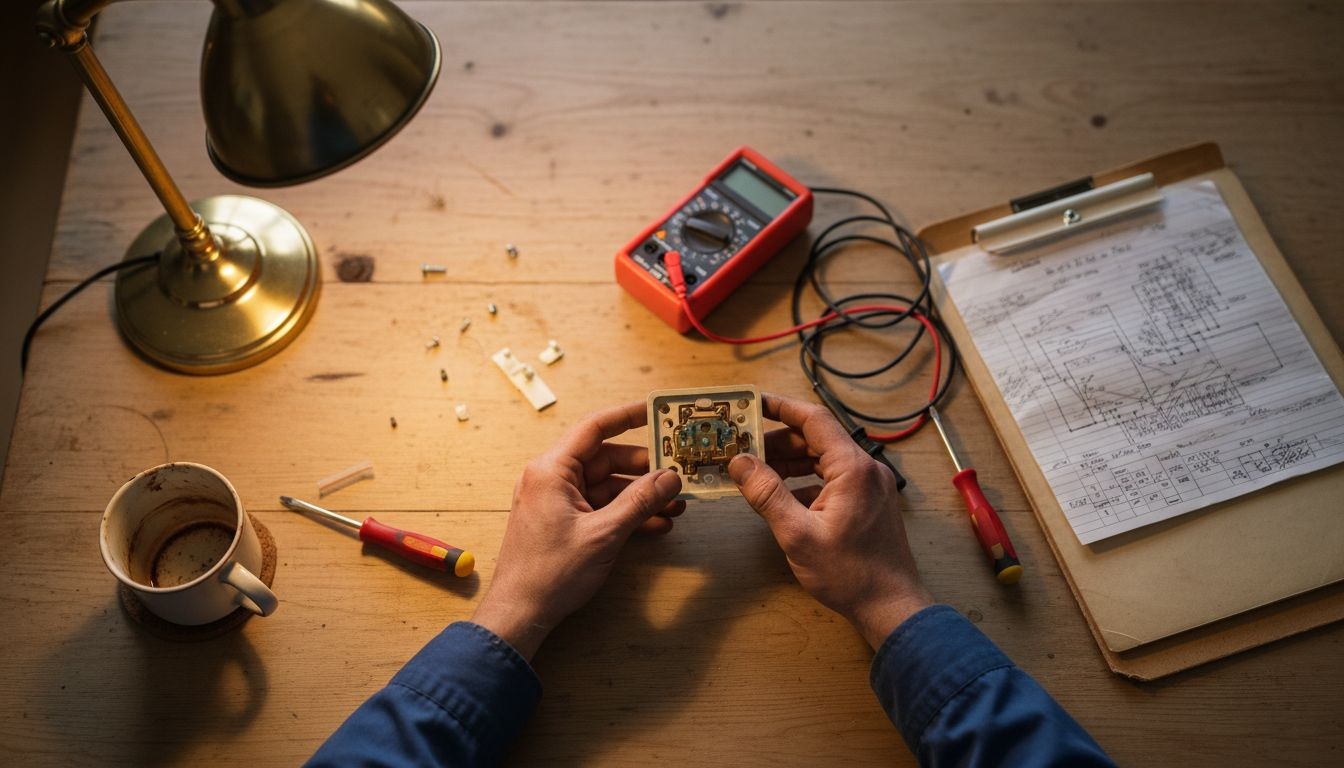
Begin by checking all visible wiring throughout your home. Look for discolouration, which indicates overheating. Run your fingers along cables to feel for cracks or brittleness, and check that wiring is properly supported and not damaged by furniture, nails, or rodents. Examine junction boxes and connections to ensure they’re sealed and secure.
Next, inspect every socket and switch you can access:
Socket faces: Check for scorch marks, cracks, or loose receptacles that indicate arcing or poor connections
Switch mechanisms: Test that switches operate smoothly without sparking or crackling sounds
Surrounding areas: Look for signs of moisture, heat damage, or burn marks on walls around outlets
Earthing pins: Verify that grounded sockets have all three pins present and aligned correctly
Outdoor and wet-room sockets: These require special protection; look for weatherproof covers and proper installation
For a systematic approach, inspection and testing procedures must verify insulation resistance, continuity, and proper installation according to Belgian wiring regulations. This isn’t something you can fully assess with your eyes alone. Some problems—like insulation degradation inside walls—are invisible but deadly.
You can spot obvious hazards during visual inspection, but comprehensive testing requires specialist equipment that only qualified electricians possess.
Document your findings with photographs and notes. Mark any problem areas clearly. If you notice scorch marks, exposed wires, loose connections, or anything that looks wrong, don’t touch it. Flag those areas for professional attention.
Many expats assume that old wiring is acceptable as long as it looks stable. In Antwerp, outdated installations often fail to meet current safety standards and may not properly protect you from modern electrical loads. Professional electrical compliance work in Belgium addresses these gaps and brings your system up to code.
Pro tip: Take photographs from multiple angles of problematic areas and email them to a qualified electrician before scheduling a visit; this helps them prepare and gives you accurate quotes faster.
Step 4: Test key electrical systems for faults
Visual inspection reveals surface-level problems, but comprehensive testing uncovers hidden faults that could cause fires or electrocution. This step requires specialist equipment and knowledge, which is why most expats in Antwerp should hire a qualified electrician. However, understanding what testing involves helps you know what to expect.
Key electrical systems require specific tests to verify safety. The most critical test is insulation resistance measurement, which checks whether the insulation around wires has deteriorated and could allow dangerous current leakage. Another vital test is continuity checking, which confirms that earth connections are properly established throughout your system.
The main tests a qualified electrician will perform include:
Here’s how key electrical tests compare in purpose and outcome:
Test Type | Purpose | Typical Findings |
Insulation Resistance | Detects breakdown in wire insulation | Identifies hidden leakage risks |
Earth Fault Loop Impedance | Checks earth connections’ reliability | Reveals slow tripping circuits |
Polarity Verification | Ensures correct live/neutral arrangement | Prevents reversed connections |
Protective Device Functionality | Confirms breakers/RCDs work as intended | Flags faulty protection devices |
Earth Electrode Resistance | Assesses quality of property’s earthing | Detects poor earthing systems |
Insulation resistance testing: Detects breakdown in wire insulation that could cause shocks
Earth fault loop impedance testing: Verifies that protective devices will trip fast enough in a fault
Polarity verification: Confirms live and neutral wires are correctly connected
Protective device functionality: Tests that circuit breakers and RCDs operate as intended
Earth electrode resistance testing: Ensures your earthing system provides adequate protection
Insulation resistance and continuity checks detect faults that pose serious shock and fire hazards before they cause injury or damage. These measurements require calibrated multimeters and specialist knowledge to interpret correctly. A reading that looks normal to an untrained person could actually indicate danger.
Testing identifies invisible faults hiding inside walls and behind panels—problems your eyes can never detect but your life may depend on fixing.
When you hire an electrician, they’ll complete comprehensive testing and provide a detailed report. This report becomes your compliance record, proving to insurance companies and future buyers that your system meets Belgian safety standards. Don’t skip this step or cut corners with incomplete testing.
Expect the testing process to take several hours depending on your property size. The electrician will need access to all areas containing electrical equipment. Ask them to explain their findings clearly so you understand exactly what problems exist and what repairs are necessary.
Pro tip: Request a written test report with clear pass or fail results for each system; this document protects you legally and provides evidence of compliance if disputes arise later.
Step 5: Verify and document safety improvements
Once repairs and improvements are complete, you need to verify that work meets Belgian safety standards and document everything thoroughly. This step creates your compliance record and protects you legally. Without proper documentation, you have no proof that your electrical system is safe.
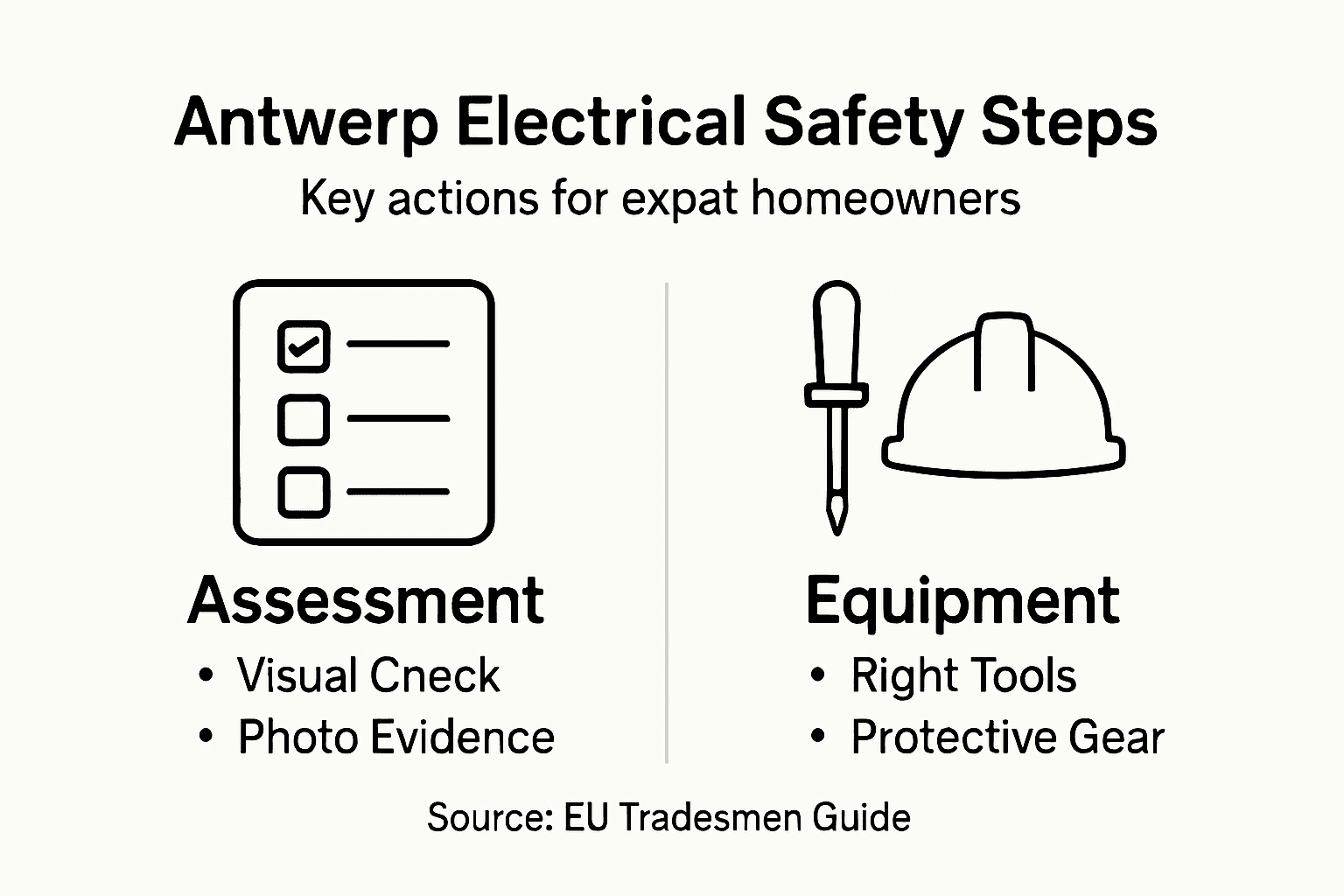
Start by collecting all reports and certificates from the work completed. Your electrician should provide test certificates showing that repairs were successful and systems now function safely. Request detailed inspection reports that list every test performed, the results, and any components replaced or repaired. These documents prove compliance to insurers, future buyers, and authorities.
Verify the improvements yourself by reviewing the documentation:
Test certificates: Confirm all systems passed safety testing with acceptable readings
Work completion records: Check that every agreed repair was actually completed
Component replacement documentation: Note serial numbers and installation dates for new equipment
Remedial action summaries: Review descriptions of problems found and how they were fixed
Certification dates: Ensure all work and testing occurred within acceptable timeframes
Recording inspection and test results along with remedial actions supports compliance with regulatory standards and provides evidence of electrical safety management. This documentation becomes your legal proof that you’ve taken reasonable steps to maintain a safe installation.
Below is a summary of essential electrical safety documentation and why it matters:
Document Type | What It Confirms | Why It Matters |
Test Certificate | All systems passed compliance checks | Required for insurance and property resale |
Completion Record | All agreed work is finished | Prevents disputes over unfinished repairs |
Component Documentation | New items’ serials and install dates | Tracks warranty and future maintenance needs |
Remedial Action Report | Issues found and how they were fixed | Documents improvements for legal protection |
Your written records prove to insurers and authorities that you’ve completed necessary safety work—without them, you have no evidence of compliance.
Create a master folder containing all electrical safety documents. Include original test reports, certificates, photographs of work before and after completion, invoices from the electrician, and any maintenance records. Store copies digitally and keep physical originals in a safe place. Future owners or insurers may request this documentation.
Maintain this documentation throughout your tenancy in Antwerp. If you perform any additional electrical work or maintenance, add new certificates and reports to your file. This running record demonstrates ongoing commitment to electrical safety and protects your liability position.
Pro tip: Photograph all test certificates and reports, then save them to cloud storage with descriptive filenames like “Electrical-Test-2024-January.pdf”; this ensures you always have access even if physical copies are damaged or lost.
Ensure Your Electrical Safety Compliance with Trusted Expert Help in Antwerp
Navigating electrical safety in Antwerp can be complex for expats, especially when it comes to conducting thorough inspections, testing insulation resistance, and documenting compliance. The risks of overlooked faults or outdated wiring are real and serious. Eutradesmen understand these challenges and provide practical, reliable electrical services designed to keep your home safe and compliant with Belgian standards.
Benefit from professional assessment, testing, and certification services tailored specifically for English-speaking residents in Antwerp and beyond. Our electricians ensure your installation meets the latest regulations, provide clear documentation, and help you avoid costly repairs or dangerous hazards later.

Don’t leave your safety to chance. Get expert support from Eutradesmen today by visiting our website. Whether you need a detailed electrical inspection, fault testing, or full compliance certification, we are here to help. Secure your property and gain peace of mind by requesting a quote for electrical services in Antwerp now.
Discover more about our wide range of trusted handyman and electrical solutions for expats across Belgium at EU Tradesmen and start your journey towards a safer home today.
Frequently Asked Questions
What are the key steps for ensuring electrical safety compliance in my Antwerp home?
To ensure electrical safety compliance, start by assessing your existing electrical installations, preparing essential safety equipment, inspecting wiring and sockets, testing key electrical systems, and verifying improvements with documentation. Complete each step thoroughly to identify hazards and address safety issues clearly.
How can I document my electrical safety inspections effectively?
Document your inspections by taking photographs of all relevant components, noting the condition and age of equipment, and keeping detailed records of the tests performed. Store these documents in a master folder for easy access and future reference.
What personal protective equipment do I need when working on electrical systems?
You need insulated gloves, safety glasses, non-conductive footwear, and long sleeves to protect against electric shock and burns. Gather these items before beginning any work to ensure your safety at all times.
What types of tests should a qualified electrician perform during inspection?
A qualified electrician should perform insulation resistance testing, earth fault loop impedance testing, polarity verification, protective device functionality tests, and earth electrode resistance tests. Each test helps identify hidden faults and confirms that your system is up to safety standards.
How often should I have my electrical installations tested for safety?
You should have your electrical installations tested at least every five years or whenever significant changes are made. Regular testing ensures that your system remains compliant and safe, reducing the risk of hazards in your home.
What should I do if I find outdated or damaged electrical components?
If you find outdated or damaged components, make a note of them and contact a qualified electrician to assess and repair them promptly. Do not attempt to fix serious issues yourself; professional intervention ensures compliance and safety.
Recommended
Contact Eutradesmen:
WhatsApp us:
+32 466 900 281
Telephone us:
+32 2 808 70 31
Email us:
Follow us on Instagram: https://www.instagram.com/eutrsdesmen/
Follow us on Facebook: https://www.facebook.com/eutradesmen/

Comments