


How Walloon electrical inspection works: a clear guide


A Walloon electrical inspection is a mandatory safety verification that confirms your home’s wiring meets the RGIE (Règlement Général sur les Installations Électriques) standards set by Belgian law. Every residential property in Wallonia must pass this check, and the resulting compliance certificate is typically valid for 25 years. That is a long window, but the inspection itself is thorough, document-heavy, and easy to fail if you are unprepared. This guide explains how Walloon electrical inspection works, what inspectors check, what documents you need, and what happens if your home does not pass first time.
How does the Walloon electrical inspection process work?
The Walloon electrical inspection process is a structured, multi-stage check carried out by an accredited inspection body such as Certinergie or Atlas Contrôle. It is not a quick visual scan. Inspectors treat it as a comprehensive safety verification, not an administrative formality. Here is what happens at each stage.
Administrative review. The inspector verifies your EAN meter code, checks the property address, and confirms the installation scope before any physical checks begin.
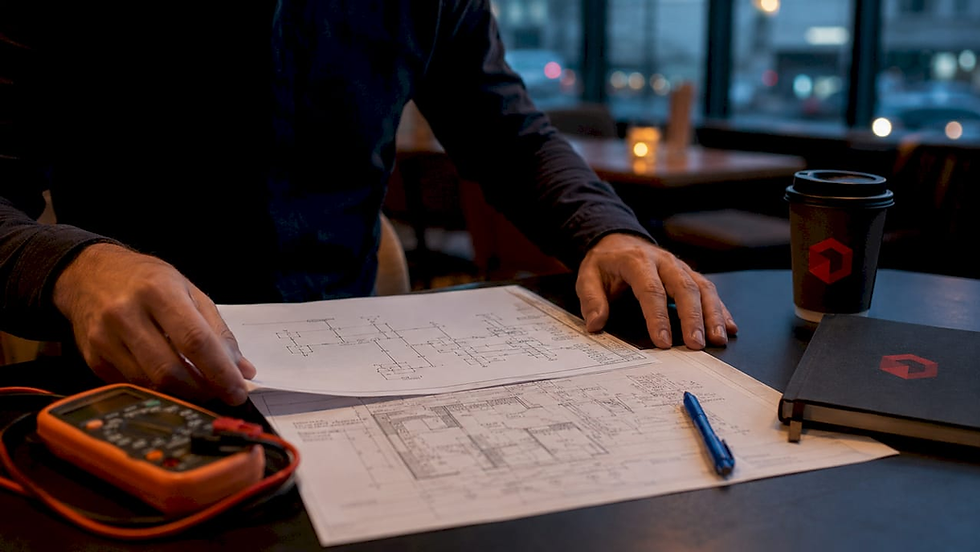
Document review. The inspector examines your two mandatory RGIE technical documents: the single-line (unifilar) electrical diagram and the layout or position plan. Both must be up-to-date and matching the actual installation. One document without the other is not acceptable under RGIE procedures.
Electrical panel analysis. The inspector checks the main distribution board for correct circuit labelling, proper fuse or breaker ratings, and the presence of differential protection devices (RCDs).
Wiring and circuit checks. All visible wiring, cable insulation, and circuit routing are checked against the diagrams. Inspectors look for exposed cables, incorrect connections, and non-compliant installations.
Safety device testing. This is where technical measurements happen. Inspectors test RCD and earth grounding resistance, verify correct polarity, check cable insulation integrity, and confirm bathroom IP zone compliance. Earth resistance must typically measure at or below 30 Ohms.
Sockets and fixed appliances. All sockets, switches, and permanently wired appliances are checked for correct installation and compliance with RGIE zone rules.
Report issued. The inspector issues either a conformity report (you pass) or a non-conformity report listing every fault found. A conformity report triggers your 25-year certificate.
What documents do you need to prepare?
Document preparation is the single biggest factor in whether your inspection passes or fails. Inspectors require both the single-line diagram and the layout plan on site, and they use them together to mentally reconstruct your entire wiring system before testing begins.
Here is what each document must contain:
Single-line (unifilar) diagram. This shows the logical wiring structure: which circuits feed which zones, how protection devices are connected, and how the distribution board is organised. It must reflect the current installation, not an older version from a previous owner.
Layout or position plan. This is a floor plan showing the physical location of every socket, switch, light fitting, panel, and fixed appliance. It must match the single-line diagram exactly. Discrepancies between the two documents are a common cause of inspection failure.
EAN meter code. This is the unique identifier for your electricity connection point. Your network operator (Ores or Resa in Wallonia) can provide this if you do not have it.
Previous inspection reports. If your property has been inspected before, bring the old report. Inspectors find it useful for context, especially in older homes.
Pro Tip: Do a diagram walk-through with your electrician before the inspection day. Walk every room, match each socket and circuit breaker to the plans, and correct any mismatches. This single step significantly reduces failure rates by ensuring your documents and your wiring tell the same story.
What happens after a non-conformity report?
Receiving a non-conformity report is common, particularly in older Walloon properties. It does not mean your home is dangerous to live in immediately, but it does mean corrective works are legally required before you receive your certificate.
Common faults found during Walloon inspections include:
Missing or incorrectly rated RCD differential protection devices
Earth grounding resistance above the 30 Ohm threshold
Exposed or non-compliant wiring in older circuits
Sockets installed in incorrect bathroom IP zones
Circuit protection mismatches between the panel and the diagrams
Once you receive the non-conformity report, the process is straightforward. You must hire an accredited electrician to carry out all corrective works listed in the report. Attempting to fix faults yourself is not permitted under RGIE rules. After the works are complete, the same accredited body that issued the original report must carry out the re-inspection. You cannot switch to a different inspector at this stage.
Pro Tip: Plan all corrective works as a single package rather than fixing faults one by one. Coordinating repair and re-inspection as one job avoids multiple call-out fees, reduces delays, and gets your certificate issued faster.

Why does electrical inspection matter beyond the certificate?
The 25-year certificate is the visible outcome, but the real value of the Walloon electrical inspection process runs deeper. Belgian RGIE regulations exist because electrical faults are a leading cause of house fires and electrocution incidents across Europe. A passed inspection confirms your home does not carry those risks.
There is also a direct financial and legal dimension. If an electrical incident occurs in your home and you cannot produce a valid inspection report, your insurer may refuse your claim and your personal liability as a homeowner increases significantly. This applies whether you are an owner-occupier or a landlord renting to tenants.
Benefit | What it means for you |
RGIE compliance | Your installation meets Belgian legal safety standards |
Insurance protection | A valid report supports your claim if an incident occurs |
Fire and shock risk reduction | Verified RCDs and earthing protect occupants daily |
Long-term maintenance clarity | The report identifies ageing circuits before they fail |
Property value | A valid certificate reassures buyers and estate agents |
For expats and English-speaking residents in Brussels, Waterloo, Tervuren, and Leuven, understanding electrical inspections in a second language adds an extra layer of stress. Working with an English-speaking electrician who knows the RGIE process removes that barrier entirely.
Key takeaways
The Walloon electrical inspection is a legally required, document-driven safety check under RGIE regulations, with certificates valid for 25 years and re-inspection mandatory after any non-conformity.
Point | Details |
Inspection validity | Compliance certificates last 25 years under RGIE, assuming no major modifications. |
Two documents required | Both the single-line diagram and layout plan must be present, current, and matching. |
Safety checks performed | Inspectors test RCDs, earth resistance (≤30 Ohms), polarity, insulation, and bathroom zones. |
Non-conformity next steps | Corrective works must be done by an accredited electrician, then re-inspected by the same body. |
Insurance and liability | A missing or invalid report can result in refused insurance claims after an incident. |
What we have learned from helping expats through RGIE inspections
Having supported English-speaking homeowners across Brussels, Waterloo, Tervuren, and Leuven through dozens of RGIE inspections, the pattern is always the same. The homeowners who struggle are not the ones with old wiring. They are the ones who arrive at inspection day without complete, matching documents.
The single-line diagram and the layout plan are not bureaucratic extras. Inspectors use them to understand your entire installation before they touch a single tester. If those documents are missing, outdated, or inconsistent with what is on the wall, the inspection stops. You pay for a failed visit and start again.
The other mistake I see regularly is treating the non-conformity report as a list to work through gradually. That approach costs more money and more time. Book your corrective works as one job, get everything fixed together, and schedule the re-inspection immediately. The same accredited body must carry out the re-inspection, so staying organised with one point of contact makes the whole process much smoother.
My honest advice: do not try to navigate this alone, especially if French or Dutch is not your first language. A reliable, English-speaking electrician who knows the RGIE process will prepare your documents correctly, carry out any compliance works, and coordinate the inspection on your behalf. That is not a luxury. It is the fastest route to a valid certificate.
— Eutradesmen
Get your Walloon electrical inspection sorted with Eutradesmen
Eutradesmen has been helping English-speaking residents across Brussels, Waterloo, Tervuren, and Leuven with electrical compliance work for over 20 years. We know the RGIE inspection process inside out, and we communicate entirely in English so nothing gets lost in translation.
Whether you need your technical documents prepared, corrective works completed after a non-conformity report, or a full inspection coordination service, our qualified electricians handle it all. We work across Wallonia and the wider Brussels region, and we offer transparent pricing with no surprises. Do not let a language barrier or paperwork confusion delay your certificate.
Ready to solve your issue? WhatsApp +32 466 900 281 for a free quote today!
FAQ
How often is a Walloon electrical inspection required?
A Walloon residential electrical inspection is required every 25 years under RGIE regulations, unless major modifications are made to the installation before that period ends.
What documents must I have ready for the inspection?
You must provide a single-line electrical diagram and a layout plan that are both current and consistent with each other. Missing or mismatched documents are a leading cause of inspection failure.
What happens if my home fails the electrical inspection?
You receive a non-conformity report listing all faults. An accredited electrician must carry out the corrective works, and the same inspection body must then re-inspect the property to confirm compliance.
Does a failed inspection affect my home insurance?
Yes. If an electrical incident occurs and you cannot produce a valid inspection report, your insurer may refuse your claim and you may face personal liability as the homeowner.
Can I use an English-speaking electrician for RGIE compliance work?
Yes. Eutradesmen provides English-speaking electricians across Brussels, Waterloo, Tervuren, and Leuven who specialise in RGIE inspection preparation and compliance work.
Contact Eutradesmen
WhatsApp: +32 466 900 281 Telephone: +32 2 808 70 31 Email: info@eutradesmen.com
Follow us everywhere
Instagram → https://www.instagram.com/eutrsdesmen/
Facebook → https://www.facebook.com/eutradesmen/
Threads → https://www.threads.com/@eutrsdesmen
Pinterest → https://www.pinterest.com/eutradesmen/
Google Maps → https://maps.app.goo.gl/zjmYyCV1uADPj7QP6
YouTube → https://www.youtube.com/@Eutradesmen
X / Twitter → https://x.com/eutradesmen
#WalloonElectricalInspection #RGIEBelgium #ElectricalInspectionBelgium #EnglishElectricianBelgium #Eutradesmen #ElectricianBrussels #ElectricianWaterloo #ElectricianTervuren #ElectricianLeuven #ExpatsInBelgium #HomeComplianceBelgium #BelgianElectricalSafety #RGIECompliance #EnglishSpeakingElectrician #WalloniaHomeOwners #ElectricalSafetyBelgium #ExpatBrussels #BrusselsExpats #WaterlooExpats #TervurenExpats
Recommended
Comments