


Spring Garden Tidy-Up: 7 Essential Tips for Gardening in Belgium


English Speaking Gardeners: Brussels, Tervuren & Waterloo
Spring sunshine returns to Belgium, waking your garden from winter dormancy. February and March signal the perfect window for garden cleanup and preparation in Brussels, Tervuren, and Waterloo. English-speaking expats often struggle with local gardening advice tailored to Belgium’s unique maritime climate. This guide provides practical, seasonally adapted tips and connects you with reliable English-speaking gardening services to transform your outdoor space as warmer days arrive.
Table of Contents
Key Takeaways
Point | Details |
Spring cleanup timing | February and March are ideal for preparing gardens as sunshine returns and plants emerge from dormancy. |
Belgian climate needs | Belgium’s mild summers and cool winters with steady rainfall support hardy plants like rhododendrons and perennials. |
Soil improvement | Belgian soil varies from sandy to clay; organic amendments boost drainage and fertility for spring planting. |
Professional services | English-speaking gardeners in Brussels, Tervuren, and Waterloo offer one-time cleanups and ongoing maintenance. |
Understanding Belgium’s Spring Garden Awakening
February and March mark the transition from dormancy to active growth in Belgian gardens. Belgium’s temperate maritime climate brings mild temperatures and increasing daylight, triggering bulbs to push through soil and perennials to show new growth. Steady spring rainfall eliminates most watering needs but requires attention to drainage.
Choosing the right plants sets your garden up for success. Rhododendrons, azaleas, and spring bulbs like daffodils and crocuses thrive in Belgian conditions. Hardy perennials such as hostas and ferns tolerate the cool, moist environment. Native plants adapted to local soil and weather require less maintenance once established.
Pro tip: Plant early bloomers like hellebores and snowdrops for color when other gardens remain bare, extending visual interest from late winter through spring.
Connecting with local gardeners and plant advice helps you select species perfectly suited to your specific Brussels neighborhood microclimate.
Essential Spring Garden Cleanup Tasks
Spring cleanup prepares your garden for the growing season ahead. Start by removing dead plant material, fallen leaves, and winter debris that harbor pests and diseases. Cut back dead perennial stems to ground level, allowing new growth to emerge unobstructed.
Inspect plants for winter damage. Prune broken or diseased branches from shrubs and trees, making clean cuts just above healthy buds. Check for frost heave that may have pushed plant roots above soil level and gently firm them back into place.
Key spring cleanup steps:
Clear leaf litter from beds and lawn areas to prevent smothering new growth
Remove protective winter mulch once temperatures consistently stay above freezing
Edge beds and pathways for clean, defined garden borders
Clean and sharpen tools before heavy spring use
Assess hardscaping for winter damage requiring repair
Pro tip: Compost healthy plant debris instead of disposing it, creating nutrient-rich soil amendment for use later in the season.
Soil Preparation for Spring Planting
Belgian soil ranges from sandy to clayey and loamy depending on location. Brussels area gardens often feature heavy clay that becomes waterlogged in spring. Adding organic matter like compost or well-rotted manure improves drainage, aeration, and fertility.

Spread a 5 to 8 cm layer of compost over beds and gently fork it into the top 15 cm of soil. This amendment breaks up clay particles, creating air pockets for root growth. For sandy soils, organic matter increases water retention and adds nutrients that leach away quickly.
Testing soil pH helps determine if amendments are needed for specific plants. Most vegetables and ornamentals prefer slightly acidic to neutral pH between 6.0 and 7.0. Rhododendrons and azaleas require more acidic conditions around 5.5.
Soil improvement benefits:
Enhanced drainage prevents root rot in heavy clay
Improved structure makes soil easier to work
Increased microbial activity releases nutrients for plant uptake
Better moisture retention in sandy areas
Pro tip: Use raised beds filled with quality soil mix in areas with challenging clay or compacted earth, giving you complete control over growing conditions.
Professional gardening soil improvement services in Brussels can handle heavy digging and amendment tasks efficiently.
Spring Planting Schedule for Belgian Gardens
Timing plantings correctly maximizes success in Belgium’s climate. Brussels typically experiences its last frost around mid-April, though dates vary slightly by year. Cold-tolerant vegetables like peas, broad beans, and spinach can go directly into garden beds from late February through March.
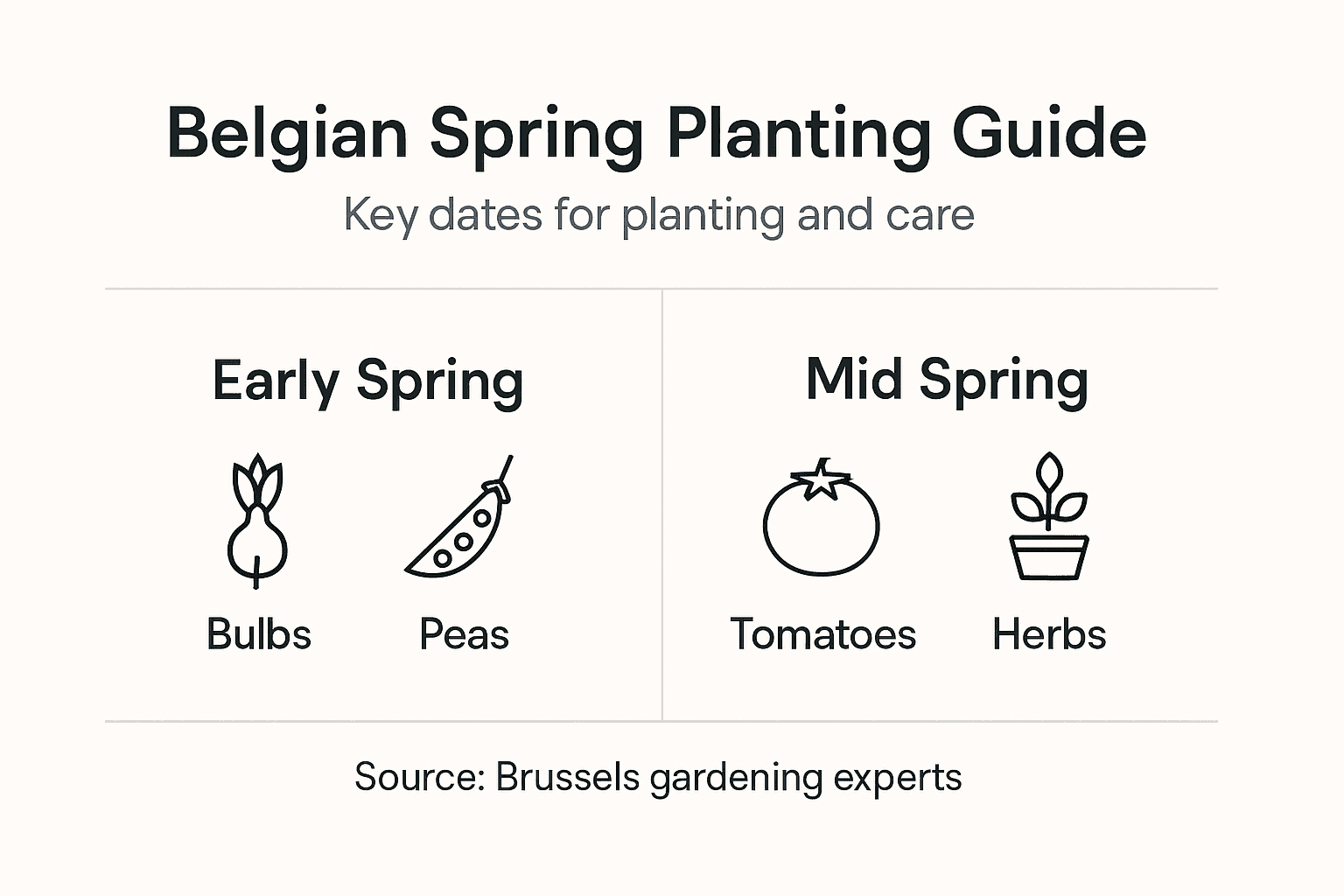
Heat-loving plants require indoor starting and later transplanting. Begin tomatoes, peppers, and cucumbers indoors in March for transplanting after frost danger passes in May. This head start ensures they have enough warm weather to mature and produce.
Spring planting timeline:
Vegetable | Indoor Sowing | Outdoor Planting | Notes |
Peas | N/A | Late Feb - March | Direct sow, cold hardy |
Spinach | N/A | Feb - April | Multiple sowings every 2 weeks |
Lettuce | N/A | March - April | Succession plant for continuous harvest |
Tomatoes | Mid March | Mid May | Needs 6-8 weeks indoors first |
Peppers | Early March | Late May | Requires warmth, transplant after frost |
Beans | N/A | April - May | Wait until soil warms above 10°C |
Steps for successful spring planting:
Prepare soil by adding compost and removing debris
Sow cold-hardy crops directly outdoors when soil is workable
Start heat-loving plants indoors 6 to 8 weeks before last frost
Harden off seedlings by gradually exposing them to outdoor conditions
Transplant after frost danger passes and soil temperature rises
Practice succession planting every 2 weeks for extended harvests
Refer to our seasonal planting and garden task guide for month-by-month details specific to Brussels and surrounding areas.
Managing Spring Garden Pests Naturally
Belgium’s humid spring climate encourages pests and diseases. Slugs and snails emerge with warming temperatures, feeding on tender new growth. Aphids colonize fresh shoots, and fungal diseases like powdery mildew threaten plants in wet conditions.
Natural control methods protect your garden without harsh chemicals. Companion planting uses certain plants to repel pests; nasturtiums attract aphids away from vegetables, while marigolds deter various insects. Physical barriers create obstacles for slugs and snails.
Natural pest control tactics:
Scatter crushed eggshells or diatomaceous earth around vulnerable plants as slug barriers
Install copper tape around pot rims; it gives slugs a mild electric shock
Encourage beneficial insects like ladybugs and lacewings that eat aphids
Hand-pick pests during early morning when they’re most active
Apply neem oil spray for aphids and fungal prevention
Rotate crop families yearly to disrupt pest and disease cycles
Pro tip: Space plants generously to improve air circulation, reducing fungal disease risk. Inspect plants weekly to catch problems early when they’re easiest to control.
Connect with local gardeners for pest control advice tailored to your specific Brussels neighborhood conditions.
Lawn Care and Renovation in Spring
Spring offers the best opportunity to repair winter lawn damage and establish healthy turf. March and April provide ideal conditions as grass begins active growth. Start by raking vigorously to remove dead grass and moss, allowing air and light to reach the soil surface.
Aerate compacted areas using a garden fork or mechanical aerator. Push the fork 10 cm deep at 15 cm intervals, then rock it back and forth to create air channels. This improves drainage and allows roots to penetrate deeper.
Overseed thin patches after aeration. Scatter grass seed suited to Belgian climate, typically a ryegrass or fescue blend. Lightly rake to ensure seed contacts soil, then keep moist until germination occurs in 10 to 14 days.
Spring lawn renovation sequence:
Rake thoroughly to remove thatch and debris
Aerate compacted areas to improve root penetration
Apply organic fertilizer to feed grass without chemical surge
Overseed bare patches with climate-appropriate grass blend
Top-dress with thin layer of compost to protect seed
Water lightly and consistently until new grass establishes
Pro tip: Wait until grass is actively growing before the first mow, then cut only the top third of blade height to avoid stressing plants.
Urban Spring Gardening for Brussels Expats
Urban gardening in Brussels maximizes limited balcony and terrace spaces through creative techniques. Vertical gardening using trellises, wall-mounted planters, and hanging baskets multiplies growing area without expanding the footprint.
Containers and raised beds offer flexibility for renters and those with poor ground soil. Choose pots at least 30 cm deep for vegetables and perennials. Ensure drainage holes prevent waterlogging during spring rains.
Urban space maximization tips:
Install vertical supports for climbing plants like peas, beans, and cucumbers
Use tiered plant stands to create multiple growing levels on small balconies
Select compact or dwarf varieties bred specifically for container culture
Practice layered planting with tall plants in back, medium in middle, low ground cover in front
Employ window boxes for herbs and small flowers on railings
Hang baskets from overhead structures for trailing plants
Pro tip: Group containers together to create microclimates that retain moisture and reduce individual watering needs.
Professional urban gardening services help design and install balcony gardens optimized for Brussels conditions.
One-Time Spring Garden Cleanup Services
Many expats prefer professional help for intensive spring garden preparation. English-speaking gardeners at Eutradesmen offer specialized one-time cleanup services throughout Brussels, Tervuren, and Waterloo. These services handle heavy work efficiently, freeing your weekends for enjoying spring sunshine.
One-time cleanups typically include debris removal, pruning, soil preparation, and basic planting. Professionals bring proper tools and disposal solutions for green waste. They complete in hours what might take homeowners entire weekends.
Service comparison for Brussels area:
Service Type | What’s Included | Typical Cost Range | Best For |
Basic Cleanup | Debris removal, light pruning, lawn raking | €150 - €300 | Small gardens, minimal overgrowth |
Full Renovation | Complete clearance, soil amendment, replanting | €400 - €800 | Neglected gardens, new properties |
Maintenance Plan | Regular visits every 2-4 weeks year-round | €80 - €150/visit | Busy professionals, ongoing care |
When selecting a gardener, verify their experience with Belgian climate and local plants. Ask about their approach to pest management and soil improvement. Reliable professionals provide clear quotes and timeline estimates before starting work.
Pro tip: Schedule cleanup services in February or early March before the spring rush, ensuring availability and often better rates.
Contact English-speaking gardeners in Brussels for quotes on spring cleanup and ongoing maintenance tailored to your garden’s needs. Learn more about trusted gardening services in Brussels designed specifically for expat requirements.
Discover Expert English-Speaking Gardening Services in Brussels
Spring garden preparation demands time, knowledge, and proper equipment that many busy expats lack. Professional English-speaking gardeners simplify the process with comprehensive services covering cleanup, planting, and maintenance throughout Brussels, Tervuren, and Waterloo.

Eutradesmen connects you with experienced local gardening experts who understand Belgian climate challenges and communicate clearly in English. Services range from one-time spring cleanups to flexible ongoing maintenance plans that fit your schedule and budget. Whether you need complete garden renovation or regular upkeep, reliable professionals handle the heavy lifting while you enjoy the results.
Explore gardening services in Tervuren and surroundings or discover trusted gardening solutions for expats that take the guesswork out of maintaining beautiful outdoor spaces in Belgium.
Frequently Asked Questions About Spring Gardening in Belgium
When should I start my spring garden cleanup in Brussels?
Begin cleanup tasks in late February when temperatures rise above freezing consistently and soil becomes workable. Remove debris, prune dead growth, and prepare beds through March. Wait until mid-April for planting frost-sensitive species.
What vegetables can I plant outdoors in March in Belgium?
Peas, broad beans, spinach, lettuce, and radishes tolerate cool spring temperatures and can go directly into garden beds from late February through March. These cold-hardy crops actually prefer cooler growing conditions.
How do I improve heavy clay soil in my Brussels garden?
Add organic matter like compost or well-rotted manure at a rate of 5 to 8 cm depth, then fork it into the top 15 cm of soil. This improves drainage, aeration, and fertility. Repeat annually each spring for continued improvement.
Should I hire professional gardeners for spring cleanup?
Professional services make sense if you lack time, tools, or physical ability for heavy garden work. One-time spring cleanups efficiently handle debris removal, pruning, and soil preparation, typically completing in a few hours what takes homeowners full weekends.
Where can I find English-speaking gardeners in Brussels?
Eutradesmen provides access to reliable English-speaking gardening professionals throughout Brussels, Tervuren, and Waterloo. Contact them directly for quotes on spring cleanup, planting, and ongoing maintenance services tailored to expat needs.
Can I grow Mediterranean herbs outdoors year-round in Belgium?
Rosemary, thyme, and sage survive Belgian winters with protection, though basil and other tender herbs require replanting each spring. Plant hardy herbs in well-drained soil or containers that can move to sheltered locations during coldest months.
#SpringGardening #BrusselsGardening #ExpatsInBelgium #GardenCleanup #BelgianGardens #TervurenGardener #WaterlooGardening #EnglishGardener #EUTradesmen #GardenServices #SpringPlanting #UrbanGardening #BrusselsExpats #GardenTips #BelgiumLiving
Recommended
Contact Eutradesmen:
WhatsApp us:
+32 466 900 281
Telephone us:
+32 2 808 70 31
Email us:
Follow us on Instagram: https://www.instagram.com/eutrsdesmen/
Follow us on Facebook: https://www.facebook.com/eutradesmen/
#SpringGardenCleanup #BelgianGardens #BrusselsGarden #GardenTidyUp #ExpatGardening #SpringPlantingBelgium #UrbanGardenBelgium #GardenMaintenanceBE #BelgianSpringGarden


Comments