


Jet washing in Brussels: A step-by-step guide


Living in Brussels, you already know the feeling. You step out onto your patio on a bright weekend morning, look down, and there it is: a patchwork of dark green moss, grimy streaks, and stubborn city grime that no amount of scrubbing with a brush seems to shift. Brussels winters are wet and mild, which is perfect growing weather for algae, lichen, and mould on outdoor surfaces. If you are an expat or a resident who has never dealt with jet washing before, knowing where to start or who to trust can feel like a genuinely frustrating guessing game. This guide gives you clear, practical steps so you can tackle outdoor cleaning with confidence, whether you pick up the lance yourself or decide to call in a reliable local expert.
Table of Contents
Key Takeaways
Point | Details |
Jet washing is widely used | High-pressure cleaning is a trusted method in both private and public Brussels spaces for removing tough grime. |
Preparation is essential | Correct surface identification, equipment choice, and safety measures greatly improve results. |
DIY vs. professional | Weigh cost, complexity, and results—professional services often offer ease and tailored expertise. |
Regular upkeep works best | Maintenance cleaning keeps your property looking its best and extends the effects of jet washing. |
Understanding jet washing in Brussels
Jet washing, sometimes called pressure washing or high-pressure cleaning, is exactly what it sounds like: water driven through a specialised nozzle at very high pressure to blast dirt, algae, moss, oil, and other stubborn deposits from hard surfaces. The power of the water stream does the heavy lifting, which means you can clean large areas in a fraction of the time it would take with a mop and bucket.
In Brussels, jet washing is used across a wide range of situations, from private gardens in Uccle to commercial forecourts in Schaerbeek, and from residential driveways in Ixelles to large public plazas in the city centre. The wet urban climate means outdoor surfaces accumulate biological growth and grime faster than in drier parts of Europe, making regular cleaning not just cosmetic but genuinely necessary for safety. Wet moss on a patio slab is a slip hazard. Algae on a wooden deck accelerates the decay of the timber. These are real maintenance issues, not just aesthetic ones.
Surfaces commonly cleaned by jet washing in Brussels include:
Stone and concrete patios and terraces
Block-paved and tarmac driveways
Brick and render facades and garden walls
Garden paths and walkways
Wooden decking (with care and lower pressure)
Commercial courtyards and car parks
Public footpaths and pedestrian areas
For residential jet washing solutions in and around Brussels, the choice of service providers ranges from sole traders with a single machine to well-established companies with specialist fleets. Group Peeters high-pressure techniques is one example of a Brussels-area provider that positions itself as able to tailor high-pressure techniques to each client’s specific needs, claiming decades-long experience in the sector. This illustrates the variety of specialist capability that exists in the region.
On a municipal level, the scale of jet washing in Brussels is significant. Local reporting describes large-scale high-pressure cleaning operations used on pavements and public spaces as part of organised sanitation efforts in neighbourhoods like Schaerbeek. If city teams rely on this method for their most demanding cleaning tasks, that tells you something about how effective and trusted the technique is.
Surface type | Suitable for jet washing? | Key consideration |
Concrete slabs | Yes | Use fan nozzle, medium pressure |
Natural stone | Yes, with care | Lower pressure to avoid erosion |
Brick walls | Yes, carefully | Risk of mortar damage at high pressure |
Wooden decking | Yes, low pressure only | Always clean along the grain |
Painted surfaces | Risky | Can strip paint; test first |
Old render | Not recommended | High risk of damage |
Preparation: What you need before jet washing
Now that you know what jet washing involves, here is how to prepare to ensure the job goes smoothly and safely.

Good preparation is, quite simply, the foundation of a job done right. Many first-time users make the mistake of pulling out the machine and going straight at a surface without thinking through what could go wrong. A few minutes of preparation can save hours of remedial work.
Equipment checklist:
A jet washer suited to your surface (see table below)
Appropriate nozzle attachments (rotating, fan, or pencil jet)
Reliable water supply with adequate flow rate
Safety goggles and waterproof footwear
Protective gloves
Drop sheets or covers for nearby plants, furniture, or fixtures
A stiff broom for pre-sweeping loose debris
Detergent if tackling oil stains or heavy biological growth
One detail that surprises many people is the sheer range of machine types available. Specialist providers operate machines ranging from 650 litres per hour at 200 bar to compact units pushing 24 litres per minute at 3,000 bar, built specifically for different applications. For a home patio, a consumer-grade machine in the 100 to 150 bar range is usually more than sufficient. Going far beyond that on a domestic surface risks serious damage.
Machine type | Pressure range | Best used for |
Light-duty consumer | 80 to 120 bar | Garden furniture, cars, light patios |
Medium-duty consumer | 120 to 160 bar | Driveways, concrete, standard patios |
Heavy-duty professional | 200 to 500 bar | Industrial floors, heavily stained surfaces |
Ultra-high-pressure | 500 to 3,000 bar | Industrial scale, specialist cleaning only |
For most Brussels homes, a medium-duty machine hired from a local tool hire shop is entirely adequate. These are straightforward to operate once you understand the basics, and many shops will give you a brief tutorial when you collect the equipment. Check in advance that your home’s water supply pressure is sufficient; most machines need a minimum flow rate of around 8 litres per minute from the tap.
Safety note: High-pressure water jets cause serious injuries. Never point the lance at yourself, another person, or an animal. At close range, even a medium-duty consumer machine can lacerate skin. Always wear eye protection and closed-toe footwear. Keep children well away from the working area.
For helpful guidance specifically on jet washing patio tips, including advice on pressure settings and nozzle choices for Belgian garden surfaces, it is worth reviewing material specific to local conditions before you start.
Pro Tip: Before jet washing wooden decking, check that the boards are structurally sound. Jet washing can force water into cracks or splits in ageing timber, which accelerates rot rather than preventing it. If the wood is already in poor condition, consider sanding and sealing before or instead of jet washing.
Step-by-step: How to jet wash your Brussels property
With everything ready, follow these step-by-step instructions for a clean and safe finish.
The process itself is not complicated, but doing it in the right order makes a noticeable difference to the final result. Skipping steps, particularly at the beginning, is the main reason people end up with patchy finishes or accidental damage. Brussels municipal teams use jet washing for thorough public-area deep-cleans, and they follow a systematic approach for exactly this reason.
Clear the area completely. Remove all furniture, plant pots, decorative items, and anything else that could be hit by water or debris. Move your bins well to the side.
Sweep away loose debris. Use a stiff broom to remove leaves, loose dirt, and grit before you start. Wet debris turns into messy splatter, and it clogs nozzles.
Cover or protect vulnerable features. Use drop cloths or bin bags to cover drain covers if you are applying detergent. Protect nearby plants from chemical run-off.
Connect and test your machine. Attach the garden hose, switch on the water supply first, then power on the jet washer. This prevents dry-running the pump, which causes damage.
Select the right nozzle. For concrete and stone, a 25-degree fan nozzle is a good starting point. For stubborn staining, switch to a rotating or turbo nozzle. Never start with a pencil jet (zero degrees) on a domestic surface; it is far too aggressive for most materials.
Perform a test patch. On a discreet corner of your surface, run the jet washer at medium distance, around 30 to 40 centimetres from the surface, for a few seconds. Check for any sign of damage, pitting, or mortar displacement before proceeding.
Work systematically. Start at one end and work across in overlapping rows, like mowing a lawn. Keep the nozzle at a consistent distance and angle throughout. Consistency is what produces an even result.
Apply detergent if needed. For algae, moss, or oil, apply a suitable detergent using your machine’s detergent setting and allow it to dwell for a few minutes before rinsing. Do not let it dry on the surface.
Rinse thoroughly. After cleaning with detergent, rinse the entire area fully to remove all chemical residue. Work from one end to the other in the same systematic pattern.
Inspect your work. Walk the surface and check for any missed patches, remaining staining, or areas where debris has been pushed into corners. Address these before packing up.
For wooden surfaces and decking, the technique varies. Guidance on deck cleaning with jet washing covers lower pressure settings and the importance of cleaning in line with the wood grain to avoid surface damage.
Pro Tip: To avoid “tiger striping” (those faint parallel lines left on concrete when you stop and start inconsistently), keep the nozzle moving at a steady pace and maintain the same distance from the surface throughout the pass. Stopping mid-stroke, even for a second, creates a visible mark. Work in one smooth, continuous motion across each row.
Comparing DIY and professional jet washing in Brussels
Whether you are considering doing the work yourself or bringing in a local service, here is how the two options stack up in real terms.

This is genuinely a decision worth thinking through carefully, especially for expats who may not have experience with either the task itself or with sourcing reliable local tradespeople. The honest answer is that both options have genuine merit depending on your specific situation.
Factor | DIY jet washing | Professional service |
Upfront cost | Low to moderate (tool hire or purchase) | Higher, but includes all equipment |
Time required | Several hours for a medium patio | Typically faster with pro equipment |
Learning curve | Moderate; trial and error involved | None; pros handle technique |
Risk of surface damage | Present if inexperienced | Low with reputable provider |
Insurance coverage | Usually none | Reputable providers carry liability cover |
Result quality | Good if done carefully | Consistently high with experienced teams |
Convenience | Requires your full availability | Arranged around your schedule |
Consider hiring a professional when:
The area to be cleaned is large (more than 40 to 50 square metres)
The surface is delicate, old, or unusual (heritage brick, render, natural stone)
The property has awkward access or requires scaffolding or ladders
You are a tenant and need documented proof that the job was done professionally
You have limited time or are managing the property remotely
The surface has significant oil, chemical, or biological contamination
Professional cleaning services in Brussels and the wider region bring genuine advantages for the more demanding jobs. Some Brussels-area providers claim decades of experience and can tailor high-pressure techniques to each client’s specific needs, which matters when you are working with an unusual surface or a heritage property. For straightforward domestic patios and driveways in good condition, a competent DIY approach will absolutely deliver satisfactory results. The key is being honest with yourself about your own experience level and the complexity of the task.
What to expect after jet washing: Results and maintenance
Once you have jet washed your property, here is how to make the most of your efforts and prevent future build-up.
The transformation after a thorough jet wash is usually striking. Surfaces that looked permanently stained often reveal their original colour and texture within minutes. Stone that appeared almost black from biological growth can lighten by several shades. This is one of the reasons jet washing is so satisfying when done well. However, understanding what happens next is just as important as the clean itself.
What you will typically see immediately after jet washing:
Significantly lighter and brighter surface colour
Removal of most visible moss, algae, and surface grime
Cleaner grout lines between paving slabs
Some areas of residual staining where oil or rust has penetrated the surface (these may need specialist treatment)
Surfaces that remain wet for several hours; allow full drying before applying any sealant
How long cleanliness lasts:
Realistically, in the Brussels climate, most patios and driveways will begin showing new biological growth within six to twelve months, particularly in shaded or north-facing areas. This is not a failure of the cleaning process; it simply reflects the moisture-rich urban environment. Brussels municipal cleaning operations are designed as periodic programmes for exactly this reason: regular intervention is what keeps surfaces in good condition long-term.
Simple maintenance tips to extend cleanliness:
Sweep outdoor areas regularly to remove leaf debris, which accelerates biological growth
Apply a suitable paving or stone sealant after cleaning to slow the return of algae and moss
Use a biodegradable algae inhibitor product on shaded areas prone to rapid regrowth
Keep gutters and downpipes clear so water does not pool and run across cleaned surfaces
Schedule a light rinse with a garden hose between annual jet wash sessions
Cut back overhanging vegetation that creates permanent shade over paved areas
For practical home aftercare advice covering outdoor cleaning and general maintenance in Belgium, including guidance tailored to the local climate, we have put together resources specifically for expats and residents managing their own properties.
The hidden pitfalls of jet washing Brussels homes: Our perspective
Having explained the process, let us reflect on some overlooked aspects of jet washing specifically for Brussels residents and expats.
The most common mistake we see is people assuming that any jet washer and any operator will deliver the same result. They will not. The machine matters, the pressure setting matters, the nozzle choice matters, and the technique matters enormously. We have seen perfectly good stone patios pitted and etched because someone hired a machine that was far too powerful for the surface and held the nozzle too close. That kind of surface damage is essentially permanent.
There is also a real issue with overconfidence when hiring equipment for the first time. Hiring a machine feels straightforward, but without experience, it is easy to misjudge pressure settings or distance. Wooden decking is particularly vulnerable. We would genuinely encourage anyone who is uncertain to make a very small investment in a trial session on a less visible section of their property before tackling the main area.
For expats in particular, navigating the Belgian service market without speaking Dutch or French creates an additional layer of risk. When you cannot read a provider’s online reviews or decode a quote written in another language, it becomes harder to assess whether a service is genuinely competent or simply cheap. This is exactly where working with an established, English-speaking provider changes the experience. You get clear communication, transparent pricing, and someone who understands your expectations without requiring a translation.
We would also push back on the idea that jet washing is purely a cosmetic exercise. In Brussels’s damp climate, moss and algae on paved surfaces are genuine slip hazards, particularly in autumn and winter. Keeping outdoor surfaces clean is a safety measure for your household and for visitors. If you are a landlord managing a property in Brussels, the condition of outdoor areas is part of your duty of care to tenants.
The value of choosing help wisely cannot be overstated. A reliable local provider who offers clear quotes, shows up when agreed, and explains what they are doing is worth far more than a cut-price operator who leaves you with a damaged surface and no recourse. This is as true for jet washing as it is for any other home maintenance task.
Professional support for your Brussels cleaning needs
If you are ready to tackle jet washing or would prefer expert help, here is a straightforward path to reliable support.
At Eutradesmen, we work specifically with English-speaking expats and residents across Brussels, including Ixelles, Uccle, and Schaerbeek, as well as in Waterloo, Tervuren, Leuven, and beyond. We understand the frustrations of managing a home in Belgium when the language and local service landscape feel unfamiliar.
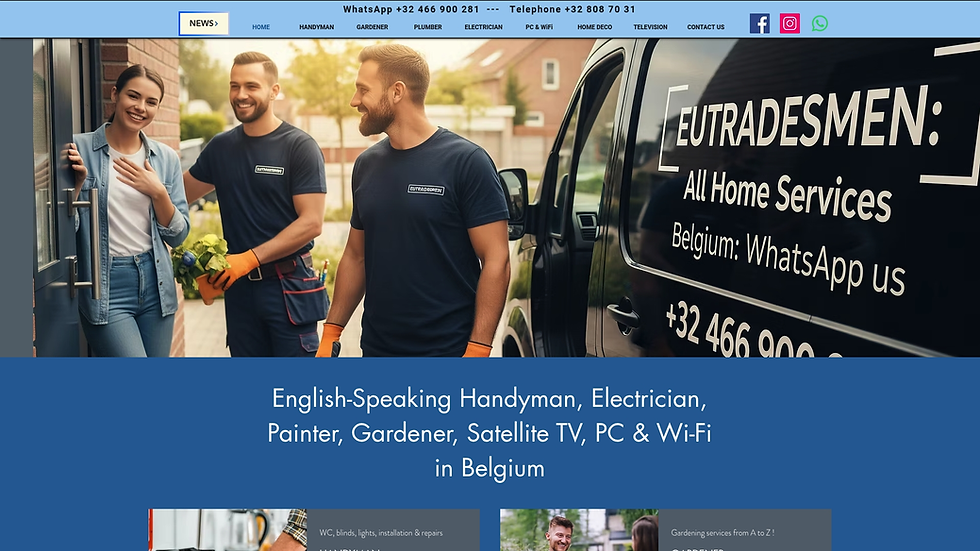
Whether you need advice on the right approach for your specific surfaces or want a professional team to handle the whole job from assessment to final rinse, our Brussels English-speaking handyman service is here to help. We offer clear quotes in English, reliable scheduling, and experienced professionals who take care of your property as if it were their own. For a broader look at everything we offer, visit our handyman services in Belgium page and get in touch. No jargon, no language barriers, just practical help when you need it.
Frequently asked questions
How often should outdoor areas in Brussels be jet washed?
Most patios and driveways benefit from jet washing once or twice a year to combat moss, algae, and city grime. Municipal cleaning operations in Brussels follow a periodic schedule for the same reason: regular intervention keeps surfaces in best condition.
Is jet washing safe for all outdoor surfaces?
Not all surfaces are suitable. Delicate materials like old brick, soft render, or painted wood can be damaged by high pressure, and these require either a much lower pressure setting or manual cleaning instead.
Do I need a special permit to jet wash my home in Brussels?
Generally, no permit is required for private residential jet washing, but local rules may restrict water use during drought conditions or limit working hours to avoid noise nuisance, particularly in apartment buildings or shared courtyards.
What is included in a professional jet washing service in Brussels?
A reputable service typically includes a site assessment, equipment set-up, thorough cleaning of the agreed areas, and a final check to ensure no damage or debris has been left. Some Brussels providers tailor the approach to your specific surface type and requirements, drawing on considerable hands-on experience.
Contact Eutradesmen:
WhatsApp: +32 466 900 281 Telephone: +32 2 808 70 31 Email: info@eutradesmen.com
Follow us everywhere:
Instagram → https://www.instagram.com/eutrsdesmen/ Facebook → https://www.facebook.com/eutradesmen/ Threads → https://www.threads.com/@eutrsdesmen Bluesky → https://bsky.app/profile/eutradesmen.bsky.social TikTok → https://www.tiktok.com/@eutradesmenbelgium Pinterest → https://www.pinterest.com/eutradesmen/ Google Maps → https://maps.app.goo.gl/zjmYyCV1uADPj7QP6 YouTube → https://www.youtube.com/@Eutradesmen LinkedIn → https://www.linkedin.com/in/eutradesmen-belgium X - Twitter → https://x.com/eutradesmen
#JetWashingBrussels #PressureWashingBelgium #BrusselsExpats #ExpatLifeBelgium #HandymanBrussels #CleanPatiBrussels #IxellesCleaning #UccleMaintenance #SchaerbeekClean #BrusselsHomecare #EnglishHandymanBrussels #ExpatHomeBelgium #PatioCleaningBrussels #JetWashBelgium #BrusselsPropriétaire #EutradesBelgium #Eutradesmen #HomeMaintenanceBrussels #OutdoorCleaningBelgium #BrusselsResidents
Recommended


Comments